Alexandru – gaining skills for independence

A teacher shows Alexandru a card.

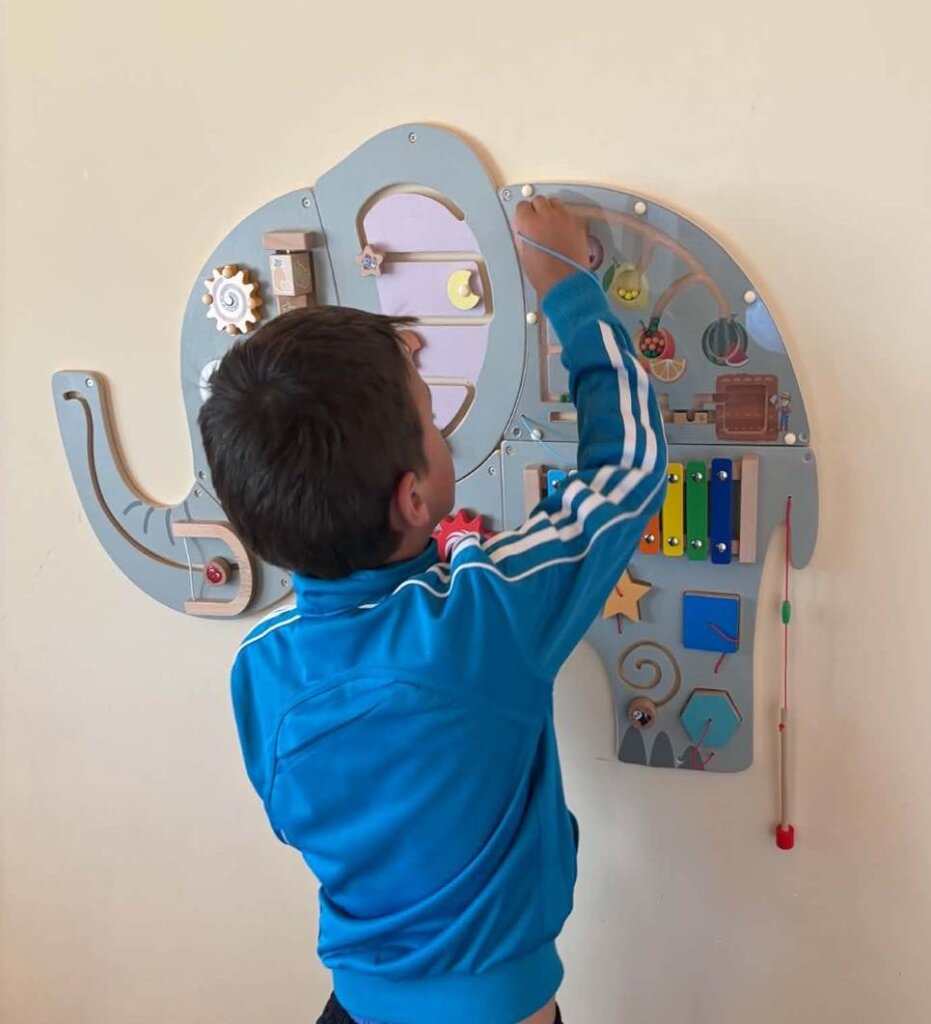
Alexandru came to The Wish, our partners in Călărași, Moldova, because his parents were concerned about his behaviour.  He was five and his parents were desperate because they didn’t know what to do when he had an emotional outburst or how to control his challenging behaviour.  Alexandru is autistic, and his behaviour flowed from the challenges he was facing.  In the last year our colleagues have worked on his difficulties communicating (at the start he was mainly using gestures), following simple instructions, concentrating and interacting with other children.  

He has made great progress in this time.  His words are more understandable so he is able to communicate what he wants or needs better.  He enjoys joining in simple activities and can cope better with being around other children.  He even sometimes initiates contact – perhaps sharing a toy.  He is also becoming more independent, something his family have been very supportive with.  Our colleagues have advised them on how to get him involved in doing more simple tasks for himself.  

His family are extremely happy! They have started to see his potential and to feel more confident in supporting him.  There is, however, a limit to what they can manage, since they have to work long hours.  We would love to be able to give him more time at the Wish, but at the moment, one day a week is all they can afford to give him.  When we see what progress Alexandru can make in a safe space with patient support and the right therapy, we want to be able to give this to the many children who would also benefit.  Your donations can help us do more for children with special needs in our community who have no-where else to turn.

Autism Acceptance Month

April is World Autism Acceptance Month. In the UK we have made a shift from the usual awareness month to an acceptance month, and that is important. Of course autistic people around the world want other people to be aware of autism, but they also want to be accepted as part of the community, and as who they are.

However, in many parts of the world a great deal of work still needs to be done on awareness and the most basic rights for autistic people. In Eastern Europe, autism is still a new diagnosis and support within the community can be very patchy. In Moldova autistic children are often not able to attend school. There is little or no understanding of their needs, so if they do attend they find school very tough. We work with two organisations that are filling the gap, providing therapy and education for children who would otherwise be unsupported. They can also advocate for children with local schools so that they can attend, albeit sometimes part-time or with their mother acting as an unpaid classroom assistant.

In Russia we work with Communication Space to raise awareness of alternative communication methods that can work with non-verbal autistic children and young people. Those who attend their own centre are a wonderful advert for this approach. They are learning to express their wishes, to follow instructions, and to communicate out in the world, in shops and cafes. Online training sessions spread the approach to parents and professionals across the Russian-speaking world. Alongside this practical work, Communication Space also runs counselling sessions for parents. For them, acceptance is the first step towards a more positive outlook on life.

We hope that these small steps towards greater awareness, understanding and support will in time lead to greater acceptance in the communities we work in and beyond.